
CEFAXONE FOR INJECTION 500 MG/VIAL [SIN10888P]
Active ingredients: CEFTRIAXONE SODIUM EQV CEFTRIAXONE
Last updated on 9 October 2026
Product Info
CEFAXONE FOR INJECTION 500 MG/VIAL
[SIN10888P]
Product information
Active Ingredient and Strength | CEFTRIAXONE SODIUM EQV CEFTRIAXONE - 500 MG/VIAL |
Dosage Form | INJECTION, POWDER, FOR SOLUTION |
Manufacturer and Country | SHIN POONG PHARMACEUTICAL CO LTD - KOREA, REPUBLIC OF |
Registration Number | SIN10888P |
Licence Holder | ZYFAS PHARMA PTE LTD |
Forensic Classification | PRESCRIPTION ONLY MEDICINES |
Anatomical Therapeutic Chemical (ATC) code | J01DD04 |
Prescription-only Medicines with Exemptions for Supply without Prescription | NA |
Indication
■ INDICATIONS
Spectrum of activity
Staphylococcus aureus (including penicillinase-producing strains), Staphylococcus epidermidis, Streptococcus pneumoniae, Streptococcus group A (Str. Pyogenes), Streptococcus group B (Str. aggalactiae), Streptococcus viridians group, Streptococcus bovis, Aeromonas spp., Alcaligenes spp., Branhamella catarrhalis, Citrobacter spp., Enterobacter spp. (some strains are resistant), Escherichia coli, Haemophilus ducreyi, Haemophilus influenzae (including amplicillin-resistant strains) Haemophilus parainfluenzae, Klebsiella spp.,(including KI, pneumoniae), Moraxella spp., Proteus morgani, Proteus mirabilis, Proteus vulgaris, Providen-cia spp., Neisseria gonorrheae (including penicillinase producing strains), Neisseria meningitides, Plesiomonas shigelloides, Pseudomonas aeuroginosa (some strains are resistant) Salmonella spp. (including S. typhi), Serratia spp. (including S. Marcescens), Shigella spp., Yersinia spp. (including Y. enterocolitica), Treponemapallidum, Bacteroides spp. (including some strains of B. fragilis), Clostridium spp. (except CI. Difficile) Fusobacterium spp. (except F. mortiferum and F. varium), Peptococcus spp., Peptostreptococcus spp.
INDICATIONS
1. Main Indications
Respiratory tract infections such as pneumonia, bronchitis, etc., ear, nose and throat infections, renal and urinary tract infections, sepsis and meningitis, perioperative prophylaxis of infections, bones and joints infections, infections of skin, wounds and soft tissue, Abdominal infections (peritonitis, infections of biliary and gastrointestinal tract), genital infections such as gonorrhea, etc.
2. Can be used in the following disease: infections in immunosuppressed patients.
Dosing
■ DOSAGE AND ADMINISTRATION
1. Adults and children over twelve years: 1~2g (potency) of ceftriaxone sodium is administered once daily intravenously or intramuscularly. In severe case or infections caused by moderately sensitive organisms, the dosage may be increased up to 4g (potency) once daily.
2. Neonates (14 days or below): A daily dose is 20~50 mg (potency)/kg bodyweight is administered once a day and not to exceed 50mg (potency)/kg. It is not necessary to differentiate between premature and infants born at term.
3. Infants and children (15 days to twelve years): daily dose of 20~80mg (potency)/kg is administered once a day. For children of 50 kg bodyweight or more, the usual adult dosage should be used. Intravenous doses of 50mg (potency)/kg or more should be given by infusion over at least 30minutes.
4. Elderly patients: In elderly patients, the dosages recommended for adults can be used without modification.
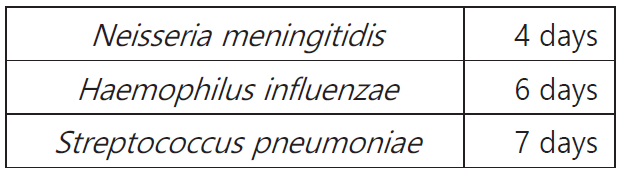
5. Meningitis: In bacterial meningitis in infants and children, treatment begins with doses of 100 mg (potency)/kg (not to exceed 4 g (potency)) once daily. As soon as the causative organism has been identified and its sensitivity determined, the dosage can be reduced accordingly.
The following duration of therapy has shown to be effective
6. Gonorrhea: For the treatment of gonorrhea (penicillinase-producing and nonpenicillinase-producing strains), a single i.m. dose of 250 mg (potency) is recommended.
7. Perioperative prophylaxis: To prevent postoperative infection in contaminated or potentially contaminated surgery, the recommended approach is single dose of 1~2g (potency) administered 30~90 minutes prior to surgery depending on the risk of infection. In colorectal surgery, concurrent (but separately administered) administration of CEFAXONE with or without 5-nitroimidazole (e.g. ornidazole) has proven effective.
8. Impaired renal and hepatic function: In patients with impaired renal function, there is no need to reduce the dosage of CEFAXONE if hepatic function is intact, but in case of preterminal renal failure (creatinine clearance <10ml/min>) the dosage should not exceed 2g (potency) daily. In patients with liver damage, there is no need for the dosage to be reduced if renal function is intact. In cases of combined severe renal and hepatic dysfunction, the plasma concentration of the ceftriaxone should be measured at regular intervals. In patients undergoing dialysis, no additional supplementary dosing is required after the dialysis. Serum concentrations should be monitored, however, to determine whether dosage adjustment is necessary, since the elimination rate in these patients may be reduced.
○ Duration of therapy
The duration of therapy varies according to the recovery from the disease. In general, as with other antibiotic therapy, administration of the Cefaxone should be continued for a minimum of 48 to 72 hours after the patient has become afebrile or evidence of bacterial eradication has been obtained.
○ Preparation of injectable solution
1. Intramuscular injection: For i.m. injection, CEFAXONE 0.5g is dissolved in 2ml and CEFAXONE 1 g in 3.5 ml of 1% lidocaine hydrochloride solution and injected well within the body of a relatively large muscle. It is recommended that not more than 1g is injected at one site. I.m injection without lidocaine solution is painful. The lidocaine solution must never be administered intravenously.
2. Intravenous injection: For I.V. injection, CEFAXONE 0.5 g is dissolved in 5ml, and CEFAXONE 1g in 10 ml sterile water for injection. The intravenous administration should be given over two to four minutes. In case of intravenous infusion, the infusion should last at least 30 minutes. For i.v. infusion, 2 g of CEFAXONE is dissolved in 40 ml of one of the following calcium-free infusion solutions, sodium chloride 0.9%, sodium chloride 0.45%+dextrose 2.5%, dextrose 5%, dextrose 10%, dextran 6% in dextrose 5%, hydroxyl ethyl starch 6~10% infusions or sterile water for injection. CEFAXONE solutions should not be mixed with or piggybacked into solutions containing other antimicrobial drugs or into diluent solutions other than those listed above, owing to possible incompatibility.
Reconstituted solutions retain their physical and chemical stability for six hours when stored below 25°C or 24 hours at 2–8°C. As a general rule however, the solutions should be used immediately after reconstitution. Reconstituted solution has color ranging from pale yellow to amber, depending on the concentration and the length of storage. This characteristic of the active ingredient is of no significance for the efficacy or tolerance of the drug.
Contraindications
■ CONTRAINDICATIONS
1) Patients with history of shock to ceftriaxone sodium.
2) Patients with hypersensitivity to cephalosporins.
3) Patients with hypersensitivity or history of hypersensitivity to penicillins.
4) Patients with hypersensitivity to anilide local anesthetics such as lidocaine, etc. (in case of i.m. injection)