
NITROMINT SUBLINGUAL SPRAY 400MCG/SPRAY [SIN17597P]
Active ingredients: GLYCERYL TRINITRATE
Last updated on 9 October 2026
Product Info
NITROMINT SUBLINGUAL SPRAY 400MCG/SPRAY
[SIN17597P]
Product information
Active Ingredient and Strength | GLYCERYL TRINITRATE - 400 MCG/SPRAY |
Dosage Form | SPRAY, METERED |
Manufacturer and Country | EGIS GYOGYSZERGYAR ZRT - HUNGARY |
Registration Number | SIN17597P |
Licence Holder | JOYSON PTE. LTD. |
Forensic Classification | PHARMACY ONLY MEDICINES |
Anatomical Therapeutic Chemical (ATC) code | C01DA02 |
Prescription-only Medicines with Exemptions for Supply without Prescription | NA |
Indication
1. What Nitromint Spray is and what it is used for
Nitromint Spray is a smooth muscle relaxant.
The walls of many of the body’s veins and arteries are made of smooth muscle, and so glyceryl trinitrate helps to widen these vessels.
When you spray Nitromint Spray under your tongue it is quickly absorbed in the bloodstream. The action of Nitromint Spray allows blood to flow more quickly and more easily. This means that your heart does not need to work so hard. The greater blood flow through the heart also means that the heart works more efficiently.
These actions of glyceryl trinitrate bring relief in an attack of angina and can prevent an attack coming on.
Nitromint Spray is for the relief and prevention of angina attacks (chest pains).
Dosing
3. How to use Nitromint Spray
Always use this medicine exactly as your doctor or pharmacist has told you. Check with your doctor or pharmacist if you are not sure.
Before using the spray for the first time, check that the pump is working by pressing the pump button a few times until it produces a fine mist of liquid. Practice aiming the spray onto a tissue or similar item so that you will be able to aim it correctly under the tongue (sublingual use) when you need to use it. If you do not need to use the spray very often, remember to check the pump regularly to see that it still works properly.
If possible, sit down before using your spray. Rest or sit quietly, as you may feel faint or dizzy otherwise, particularly if you are elderly. Take off the plastic cap and hold the spray bottle upright. There is no need to shake the canister before dosing. The spray outlet should then be placed close to the mouth. Hold your breath for a moment to avoid breathing in the spray, then open your mouth and spray a dose under your tongue by pressing down on the pump button then letting go. The mouth should be closed immediately after each dose (spray). The spray should not be breathed in. It is useful to become aware of the position of the spray outlet so that its using at night can be easily achieved.
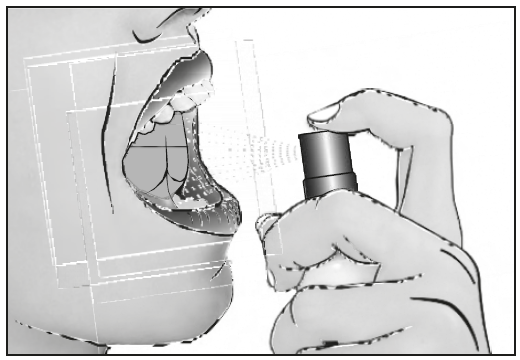
At the onset of an attack use one or two doses (sprays) under your tongue,and then immediately close your mouth before breathing normally through your nose again.
If symptoms do not resolve, this dose may be repeated at five minute intervals for a total of three doses (sprays).
If symptoms have not resolved after a total of three doses (sprays), seek prompt medical attention.
For the prevention of an attack use one or two doses (sprays) immediately before the event.
Put the cap back on the spray bottle.
If you are not sure how to use the spray, ask your pharmacist to show you.
If you use more Nitromint Spray than you should
If you use too many sprays some of the side effects (see below – please refer to the Product Insert/Patient Information Leaflet published on HSA for the full drug information) may be worse than usual.
In this case you should see your doctor immediately.
If you have any further questions on the use of this medicine, ask your doctor or pharmacist.
Contraindications
2. What you need to know before you use Nitromint Spray
Do not use Nitromint Spray if you:
Are allergic to glyceryl trinitrate, to other nitrates, or any of the other ingredients of this medicine (listed in section 6 – please refer to the Product Insert/Patient Information Leaflet published on HSA for the full drug information) (you have previously had swelling of the face, extremities, lips, inside of the mouth, tongue, glottis and/or larynx while using any of the nitrate preparations)
Have marked hypotension (low blood pressure with a systolic pressure below 90mmHg)
Have too little circulating blood (due to blood loss or dehydration)
Suffer from conditions where your heart is unable to supply enough oxygenated blood to the rest of your body (cardiac shock or left sided heart failure)
Have angina pectoris caused by hypertrophic, obstructive cardiomyopathy (abnormal heart growth)
Have constrictive pericarditis (an inflammation of the smooth membrane that surrounds the heart)
Have pericardial tamponade (an accumulation of fluid in the sac that surrounds the heart)
Have aortic and mitral stenosis (heart valve disease)
Suffer from primary pulmonary hypertension (an increased resistance to blood flow through the lungs)
Have had a heart attack with low blood supply to the heart
Are very anaemic
Take sildenafil, tadalafil or vardenafil (these drugs are used for the treatment of male impotence)
Suffer from any condition with possible raised pressure within your head including that caused by an accident